THE CONDITION OF RENEWAL
Some places disclose themselves slowly, asking for a different kind of attention. The Wiregrass bioregion is one of them.
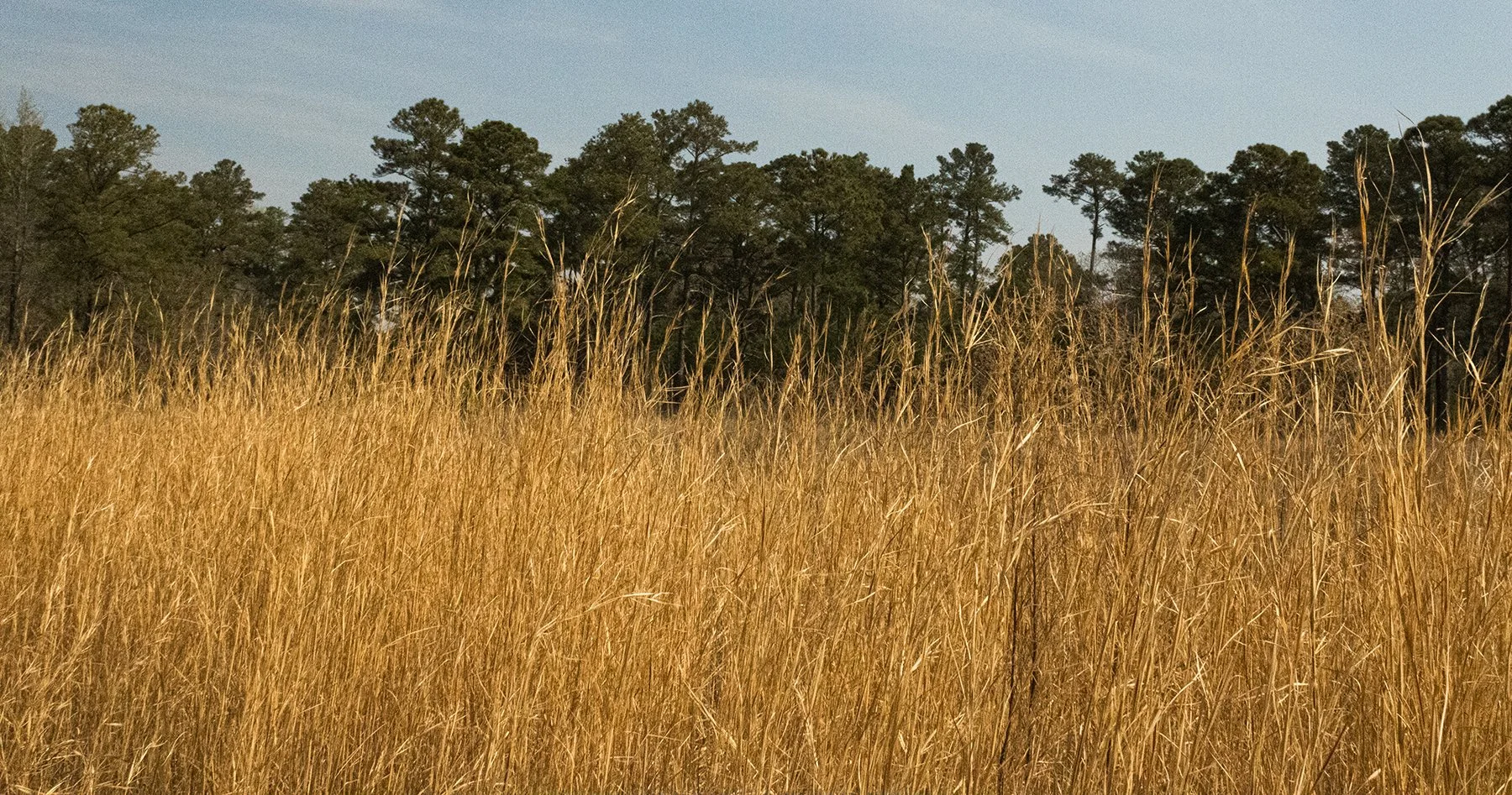
Beneath the sand and scrub of the Wiregrass is the memory of an ancient coastline. A hundred thousand years ago a more, a shallow sea ran through the interior of Southeastern Alabama. The tide has since receded, leaving behind the flat, sandy coastal plain reaching into Southern Georgia and the Florida Panhandle. This region constitutes the Pamlico terrace, the youngest of five ancient seafloors stacked one above the other, each marking a different moment when the ocean withdrew and the land emerged. A spare, nutrient-scare ground under longleaf pine and a sea of wiregrass, Aristida stricta, with dry, fine blades, and growing in dense bunches across the understory, and sustained by a layer of marine sediment. When lighting strikes, the wiregrass spreads fast, sweeping, ground fires across the forest floor, cool enough to leave the soil undisturbed. And Aristada requires exactly this to flower.
At the same time, in a striking ecological symbiosis, longleaf pine seedlings spend a decade with no trunk at all, only a dense rosette of long needles at ground level, while driving taproots deep into the loose sediment. The needles protect its budding center from the heat of passing surface fires until it bolts upward several feet in one season fast enough to lift its crown above the fire line and strong enough to withstand what burns below. The pines stand above the wiregrass like spent matches from lightning strikes that kindle the brush fires Aristida needs to live. Without fire, the Wiregrass ecosystem would collapse into sand, thorn, and hardwood scrub.
The burning is not incidental to the life of this place. It is the condition of it. The ecology of the Wiregrass is one of persistence, on a particular stubbornness of living things who find a way not merely to abide trial by fire, but require it, be made by it, and to be incapable of renewal without it.
Communities of the Wiregrass bioregion are in close relationship to the landscape: resilient, but dispersed. Primary care in these places and across the United States is currently in crisis. The primary care physician workforce in the United States, particularly in rural regions like Alabama’s Wiregrass and neighboring areas, faces sustained decline, fragmentation, and insufficient replenishment. Barriers to entry, limited exposure to healthcare careers, and a lack of coordinated support systems contribute to workforce shortages and reduced access to care. At the same time, the health of a community depends not only on clinicians, but also on the broader ecosystem that supports care delivery—including educators who prepare future students and skilled professionals who sustain infrastructure and access. The Atlas Medical Foundation was established in response to these challenges.
THE ATLAS MEDICAL FOUNDATION
The Atlas Medical Foundation, Inc (AMF, The Foundation) is a 501(c)3-eligible, mission-driven organization established in response to these challenges. The Foundation aims to advance equitable access to healthcare through education, scholarship, and community partnership.
Grounded in a regional focus on the Wiregrass bioregion, the Foundation seeks to build durable, community-rooted framework for identifying, training, mentoring, and retaining future clinicians, educators, and skilled professionals whose work sustains and enhances the health of the region.
Through its flagship initiative, the Wiregrass Medical Education Collaborative (WMEC), the Foundation will function as a forum for inquiry and shared experience between clinicians, educators, and community leaders who recognize the evolving challenges facing primary care and regional health. This structure will serve as the Foundations think-tank function to provide a scaffold for dialogue, research and mentorship, enabling experienced professionals to contribute insight while directly engaging in the development of a structured portfolio of scholarship and workforce development programs.
The Foundation is designed to operate as both a strategic convener and investing body—supporting individuals from early education through professional practice while fostering sustainable community partnerships.
To this end, The Foundation, through its aims, will address not only workforce shortages, but also the structural gaps that undermine long-term sustainability, by investing in people, partnerships, and educational pathways that reinforce the health landscape of the Wiregrass region.