
SYMBOLS & THE COLLECTIVE UNCONSCIOUS:
THE LOGOS OF MEDICAL PRACTICE
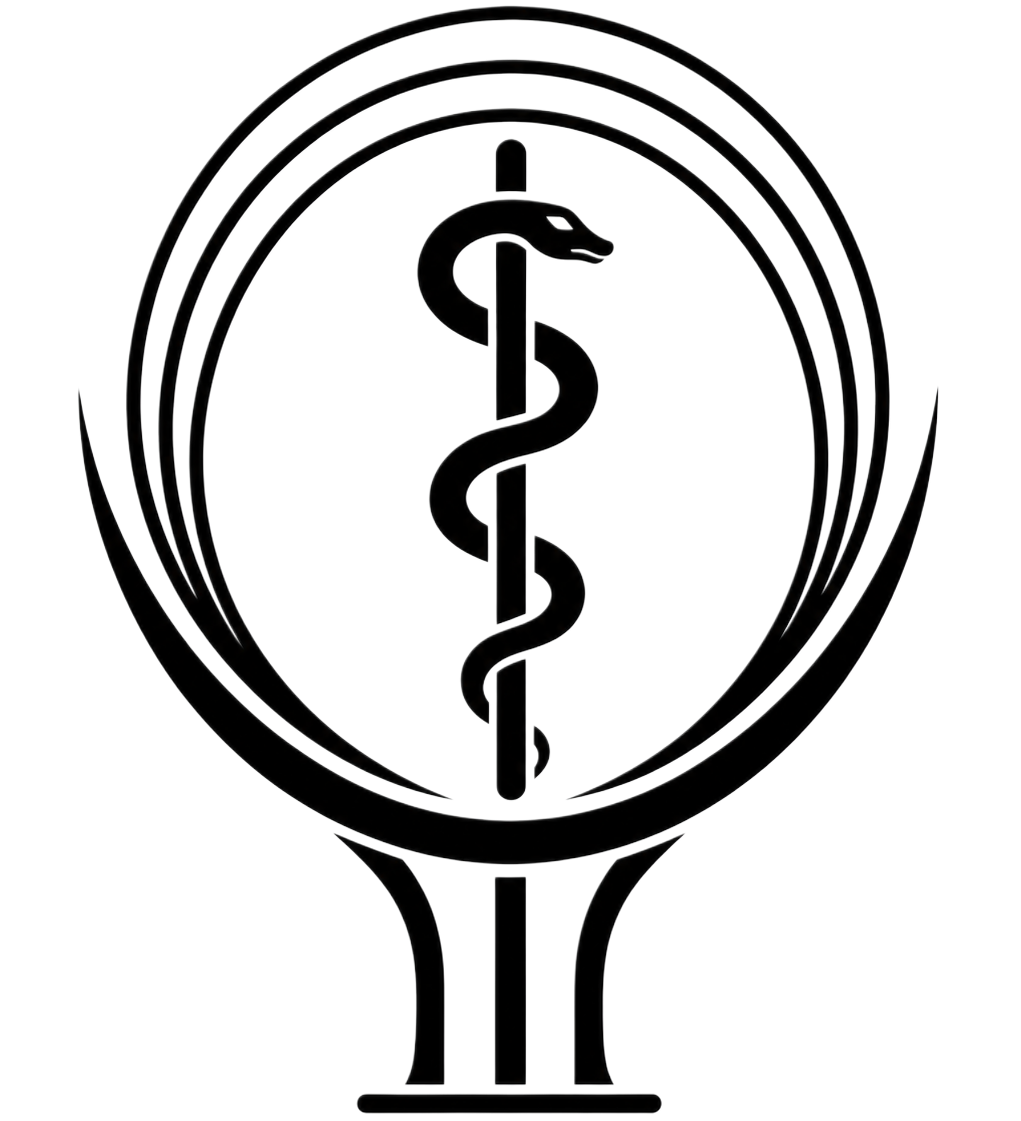
The earliest articulations for Atlas Medical and The Foundation began as vague forms during my early medical training, at the same time and concurrently when working through what kind of doctoring I wanted to do, and what kind of life I wanted to live. While I’d been thinking about entering the medical career from a young age, I had not spent enough time in careful deliberation of the medical vocation and art. Before I could fully apprehend the acts of the work, I drew them on the margins of my lecture notes and anatomy plates. In short, the symbols came first.
"In the beginning was the Word, and the Word was with God, and the Word was God." This is among the oldest and most persistent intuitions in the human record, emerging in the creative expression of countless mythological cosmogonies across every culture that have paused long enough to breathe in awareness of itself: that meaning calls structure into being. The opening of the Gospel of John captures something of this. The Word does not follow creation; it precedes it.
The Logos is that ordering word, that truthful articulation that confronts what is obscured and in naming it with care, makes it navigable. This points toward medicine's deepest vocation: the restoration of coherent narrative to a life that suffering makes strange. The medical art, in its fullest Aristotelian sense, orients itself toward health as a basic and irreducible human good. Good health, understood in this light, is a dynamic balance in motion, a deliberate and ongoing conversation with the limits and unanticipated turnings of a life well lived.
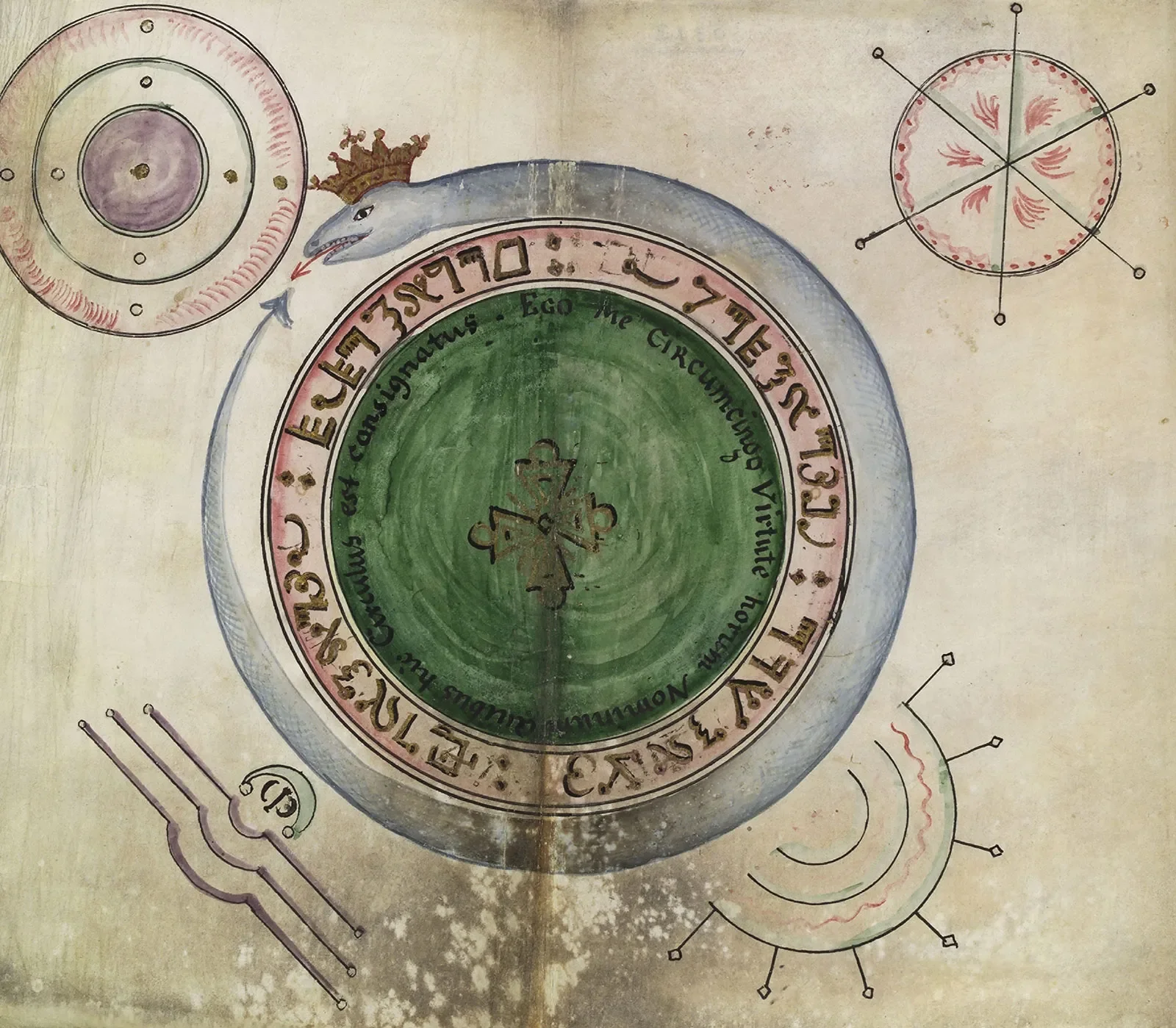
Illustration of the Ouroboros, an ancient gnostic and alchemical symbol of a serpent eating its own tail. Cyprianus, Clavis Inferni (18th c).
The Ouroboros illustrated in De Lapide Philophico (The Philosopher’s Stone), Lucas Jennis (1625).
This is why Atlas Medical and Atlas Medical Foundation have logos, and why those symbols representing the practice and foundation were upstream of any bylaws or programs. Like those earliest paintings on cave walls made before we had language. The emblems of Atlas Medical and The Foundation are condensed expressions of the Logos made visible, symbols that participate in the ordering work of healing itself.
Anchoring the focal center of the symbol of The Practice is the Rod of Asclepius: a single serpent coiled around a vertical staff. The serpent is among the oldest presences in the human symbolic inheritance, chthonic, ambiguous, regenerative. It sheds its skin and becomes new, carrying within a single form the long unity of wound and remedy, the thing that undoes and the thing that restores. The staff is its counterpart: the vertical, grounded, steady, axis of supportive presence the good physician holds amid turbulence of suffering. Historically, this image belongs to Asclepius, the Greek god of medicine, whose sanctuaries facilitated healing through discipline of attentive presence, though is often wrongly depicted on ambulances and health organizations as the Caducean symbol representing commerce and dishonesty: two serpents around a rod rather than the one. In perfectly ironic coincidence, the misplaced symbol might be more representative of modern healthcare than the true Asclepean one. For The Practice and The Foundation, the Asclepian rod with the single serpent anchors the entire composition, declaring that clinical excellence remains the indispensable, irreducible core of the work.
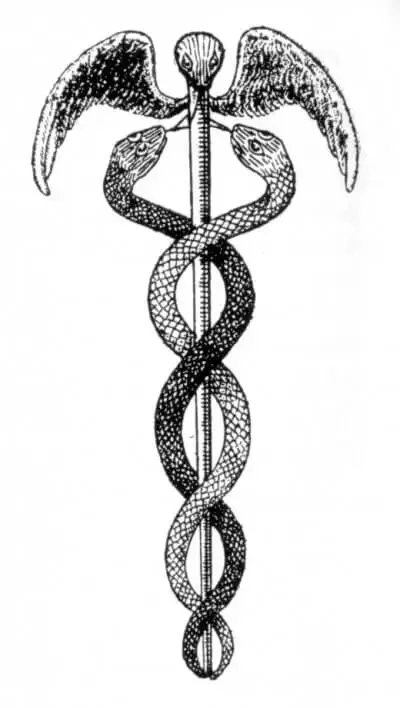
The rod of Caduceus, commonly mistaken (or perfectly ironically fitting) as a symbol of healing though was instead a symbol associated with money and deceit.
Encircling the rod are three concentric rings, suggesting containment, protection, and ordered expansion radiating outward from the healing encounter. They mirror, above, the three-pronged base below, which grounds the entire form. That base directly evokes the Greek mythological figure of Atlas — the Titan who holds the weight of the heavens as a form of ultimate responsibility. The three prongs of the Atlas support represent the three foundational pillars of The Atlas Medical Practice of medicine: Healing, Teaching, and Service. Together they form a coherent symbolic whole, one that holds the practical and the profound.
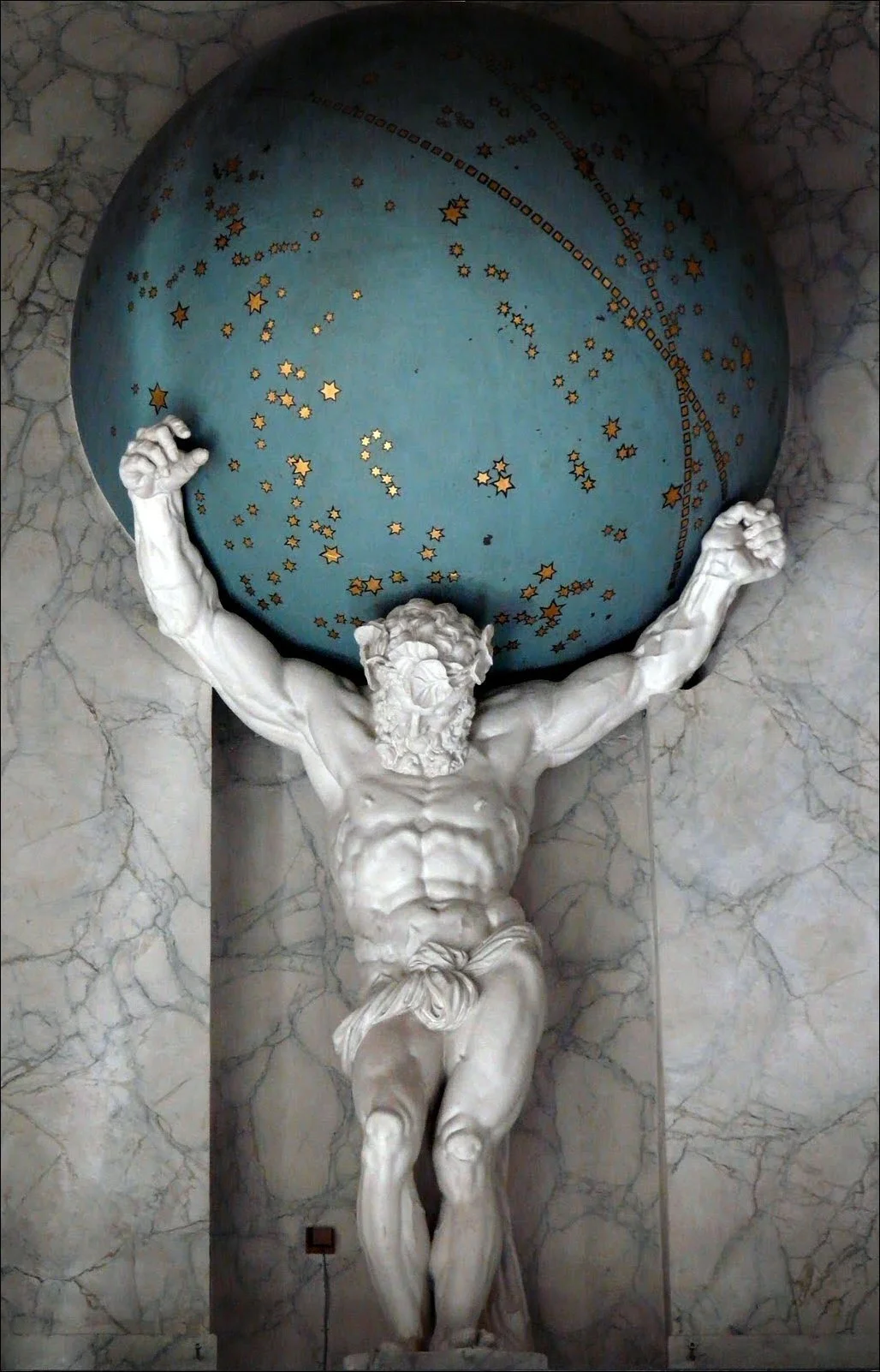
Statue of Atlas by Flemish sculptor Artus Quellinus (1650). Royal Palace, Amsterdam NL.
Good health is the means through which human flourishing becomes possible, the balanced, ongoing conversation with our limitations and unanticipated turnings. The symbols of the Practice and Foundation are aspirational. An enduring reminder like those ancient cave handprints on the wall before we had language, of the deeper currents that animate the work, of the ordering power of Logos. However one encounters the Practice, the symbol extends an invitation. It orients. It bears weight. It renews. In the end, it at least reminds me to redirect my attention in the work to that question that lies beneath all others: what does it mean to live well?